
High School (9th-12th)
Flexible Christian Courses for Homeschool Families
Northpoint’s current high school program offers a flexible, non-accredited, à la carte course model designed primarily for homeschool students.
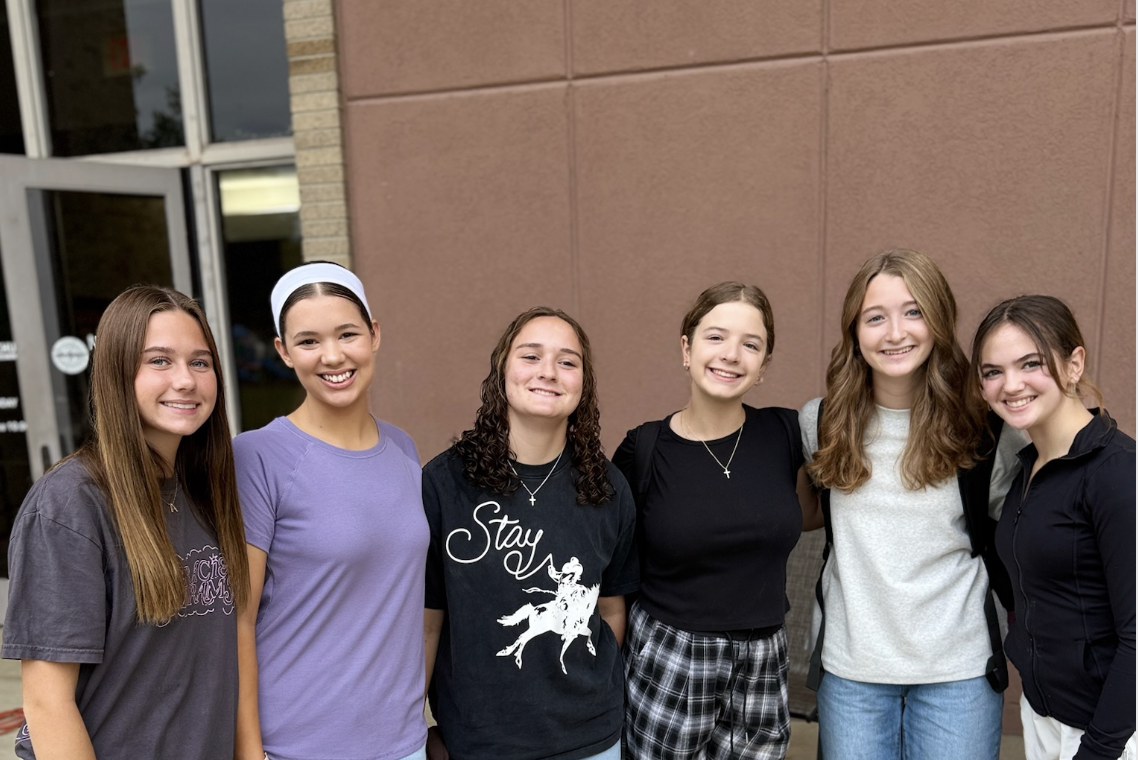
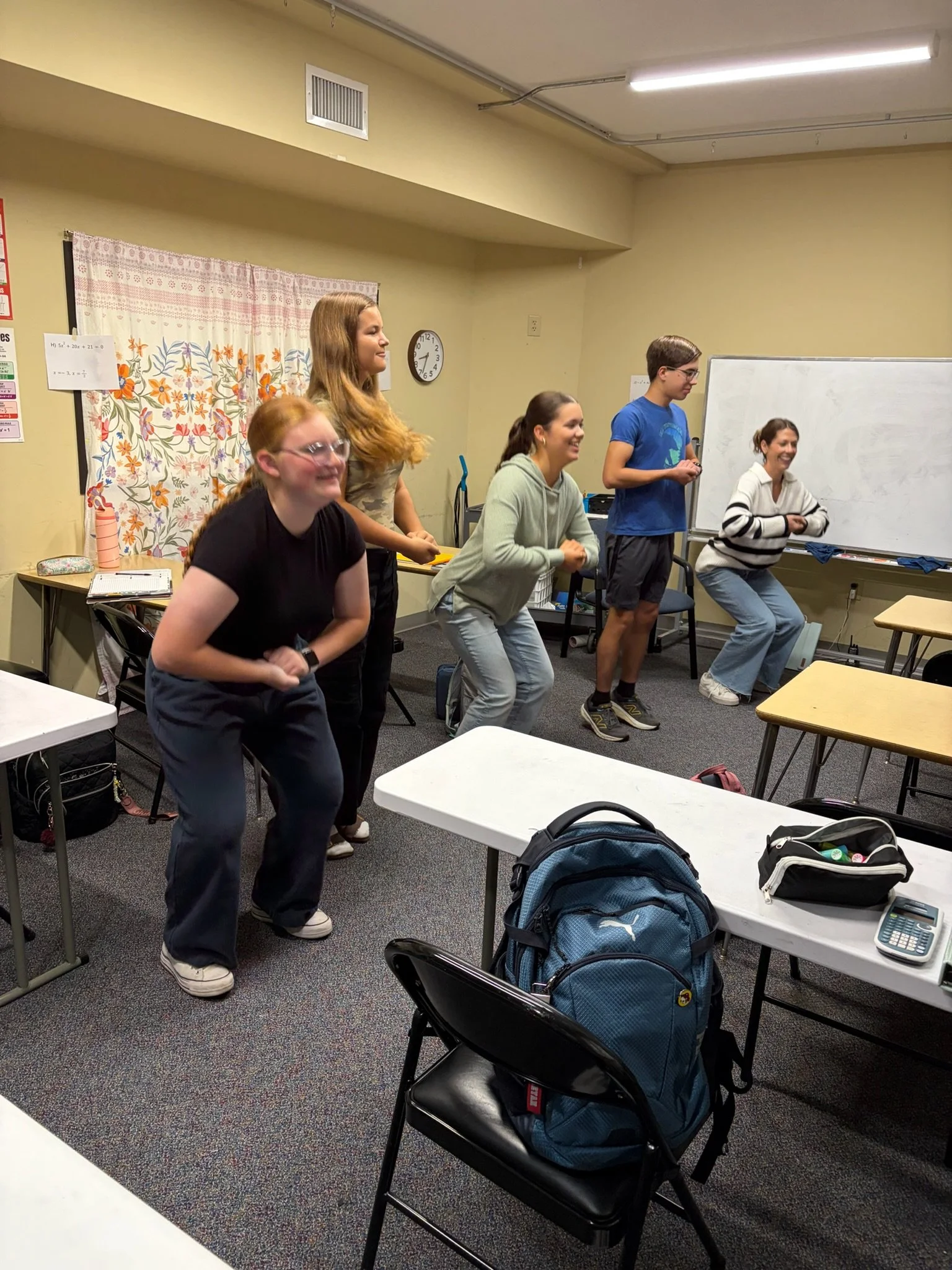
Families may select individual classes according to their student’s academic needs, graduation plan, interests, and schedule. Students benefit from experienced instructors, classroom discussion, academic accountability, Christian community, and opportunities to build relationships with peers while remaining enrolled as homeschool students.
Because the current high school operates as an à la carte program rather than an accredited diploma-granting school, parents remain responsible for overseeing their student’s homeschool enrollment, transcript, graduation requirements, and diploma.
The Current High School Model Offers
Individual course enrollment rather than full-time enrollment
Core academic and elective course options
In-person instruction three days each week
Teacher-directed assignments completed outside the classroom
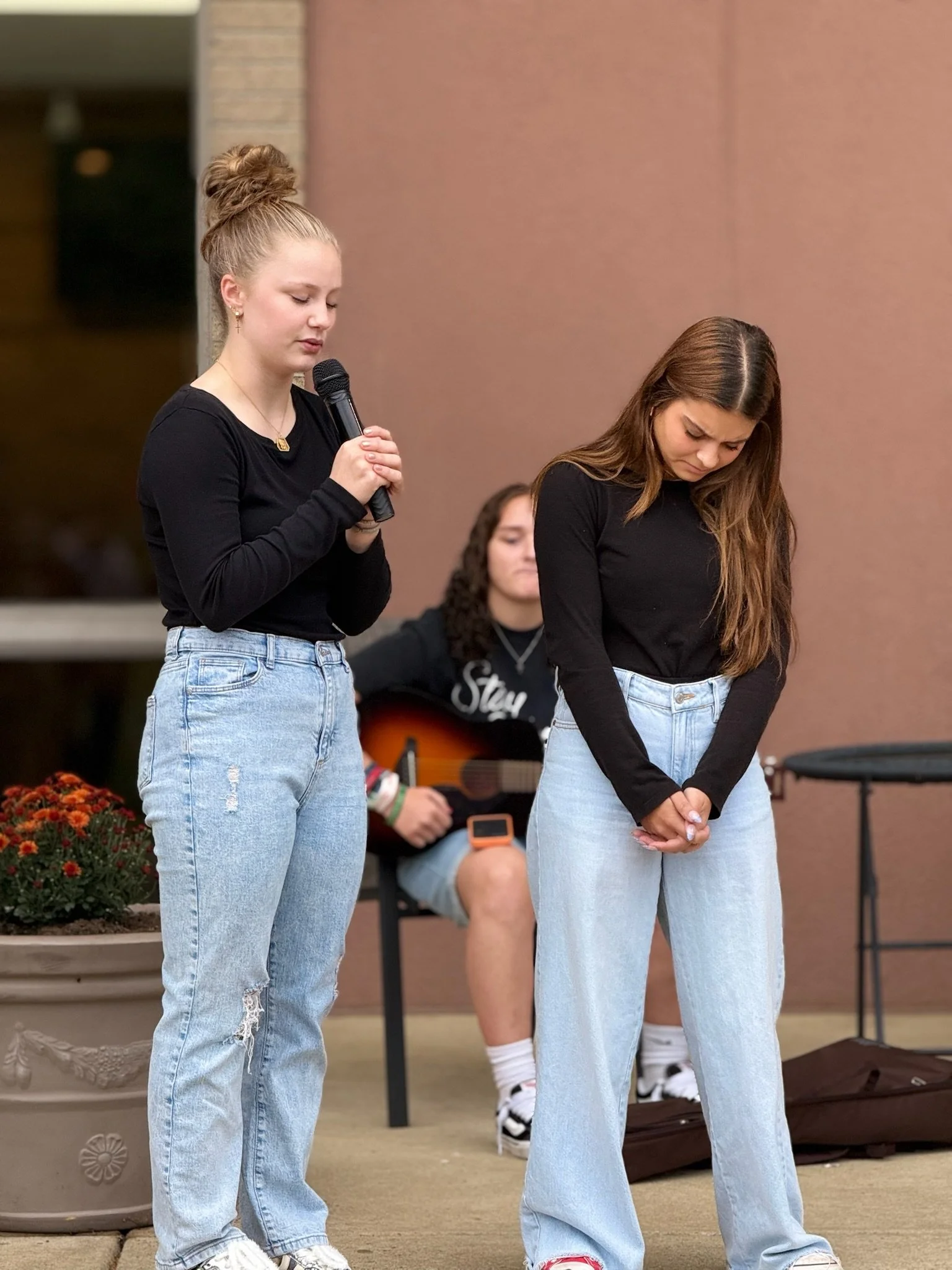
Christian teachers and biblical worldview integration
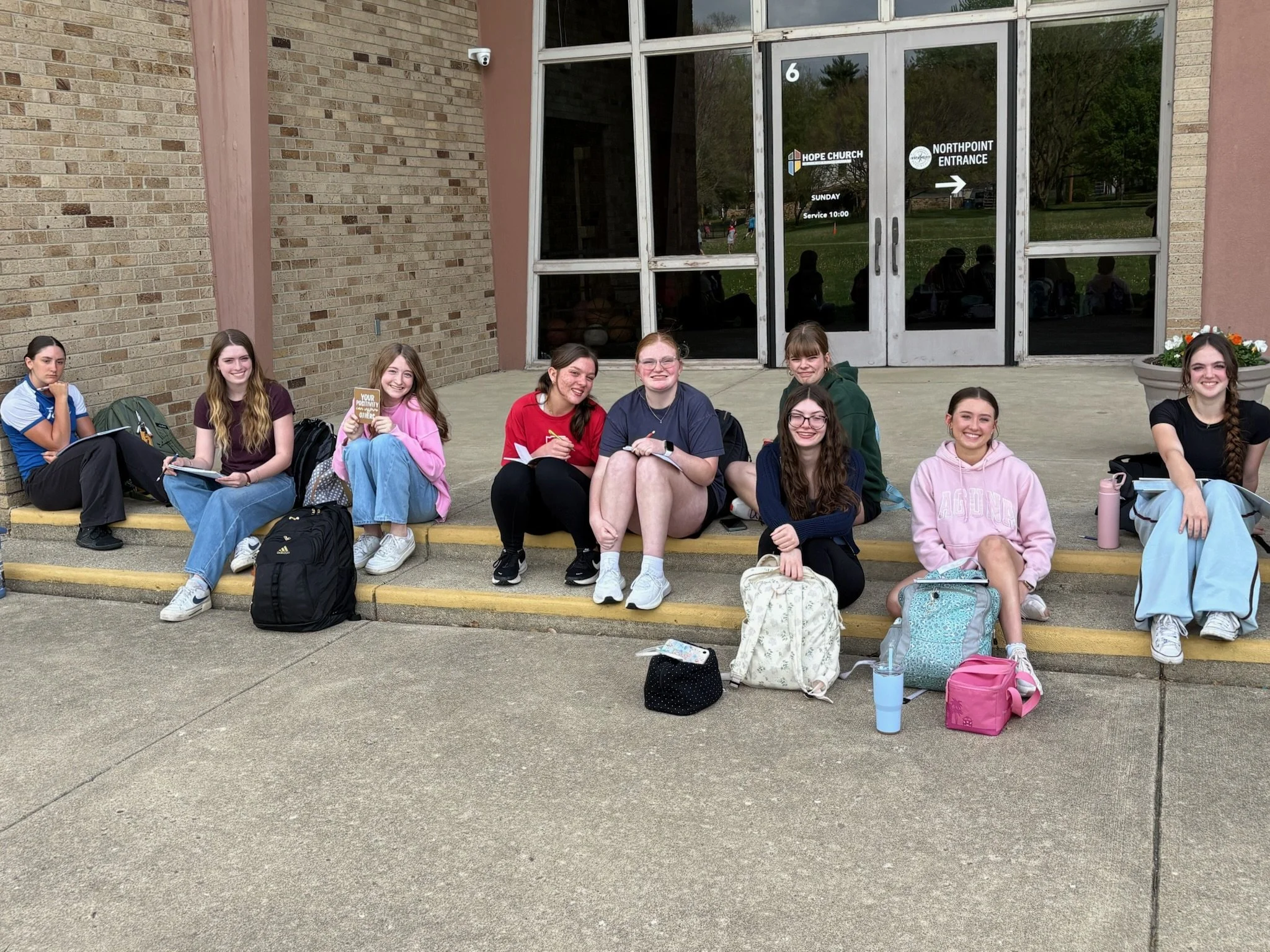
Small classes and meaningful peer relationships
Flexibility for homeschool schedules and graduation plans
Indiana Choice Scholarships are not currently available for Northpoint’s high school à la carte courses.
Course Descriptions
-
English 9
Teacher: Stacia Floberg
Students will explore a variety of literature by reading all-class and free-choice novels, poetry and short stories. All literature will be examined from a Christian perspective. Grammar and punctuation will be reviewed. Many types of writing will be developed with numerous writing assignments each semester.
Reading selections will include the following:
1st semester: Romeo and Juliet (No Fear Shakespeare Version) and A Christmas Carol (Dover Publication)
2nd semester: Will include a classical free-choice book unit, poetry unit and some short stories
English 10
Teacher: Stacia Floberg
Grammar will be reviewed briefly at the beginning of the year to be employed in a variety of writing assignments throughout the year. Students will read literature from around the world.
1st semester: Selections from the Bible, parts of The Iliad and The Odyssey and Julius Caesar (No Fear Shakespeare Version)
2nd semester: Modern day free choice selections (to be provided by teacher and approved by parents) a
The end of the year will conclude with a project and presentation.
English 11Teacher: Erica Dick
This writing intensive course is a student’s opportunity to try a variety of creative writing genres as well as grow in their knowledge of and exposure to various forms of literature. We will work on developing strong writing style, voice, understanding of story structure, compelling characters, as well as continue building dexterity in argumentation and rhetoric. We work extensively on the writing process.
Students will study a variety of literature including short stories, folk tales, children's literature, poetry, and student choice novels. With each selected work, we will investigate the cultural-historical backgrounds and worldviews that influenced each author. Students will create a portfolio of their own creative and argumentative work through the year.
Class workbook and literature selections provided by the teacher. Information about class novels will be given closer to the start of the school year.
English 12: Communication and College Writing
Teacher: Stacia Floberg
Principles of Communication (COM-100) Offered during the first semester of English 12, this dual credit introductory course analyzes the human communication process, focusing on interpersonal, group, and public speaking applications. It covers foundational skills like audience analysis, message development, and nonverbal delivery, integrating Christian perspectives on communication ethics and practice.
College Writing (ENG-140)
Offered during the second semester of English 12, this dual credit course focuses on developing effective written communication skills, emphasizing the writing process of pre-writing, drafting, revising, editing, and reflecting. Students produce personal and expository essays while evaluating, synthesizing sources, and engaging in peer feedback.
-
Anatomy and Physiology
Teacher: Kaily Colla
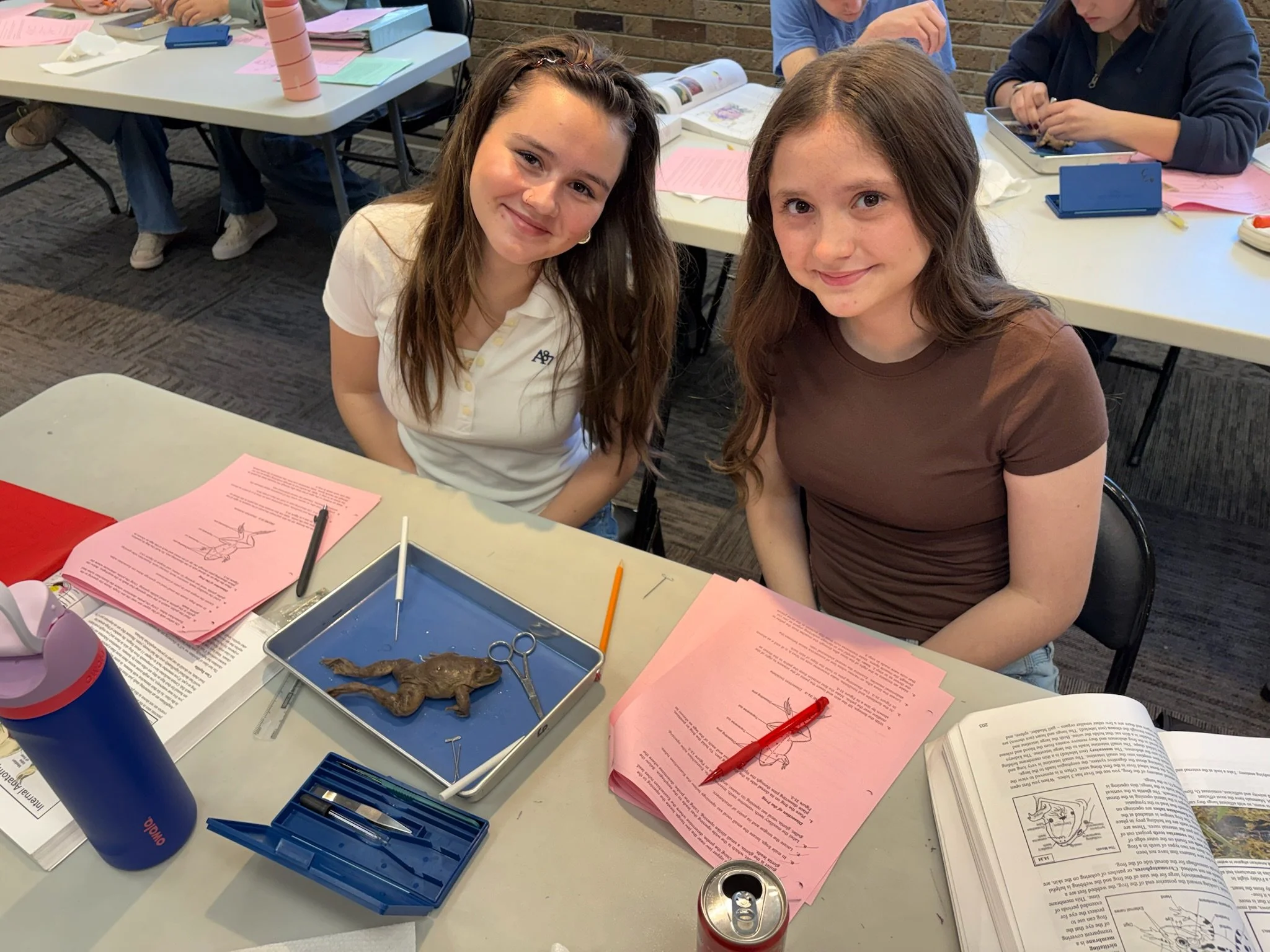
Content covers organ systems of the human body in detail. Labs will include extensive use of microscopes as well as dissection and other physiology-related labs to foster critical thinking, proper lab techniques, and collaboration. Lab reports will be completed throughout the course to develop communication and scientific writing skills. Students will be making one formal presentation during the year on topics related to the subject material. The basis for this course is Genesis 1 – God’s creation of life, specifically human life, and its value as His special creation. This is an advanced biology course that fulfills a 2-credit science course for the Core 40, or it may be used as an elective.
Prerequisite: High School General Biology
Biology
Teacher: Preston May
Students complete an overview of the processes of life and a general study of various types of living organisms in creation. Beginning at the microscopic level and ending with a study of animal life and plants, students gain an understanding of the complexity, unity, and diversity of life. Students complete reading, basic notes, lab analysis and research for various projects at home. In class, labs and activities will be completed and more notes will be given as needed. In the second semester a series of dissections are completed as a part of a study of the 5 kingdoms of life. Students are assessed with quizzes, lab reports, and tests for each chapter. Each quarter there will be a notebook check, a participation grade, and a writing assignment related to specific topics for the quarter. Study skills and proper lab procedure are emphasized in the course to prepare students for future high school science courses.
Chemistry
Teacher: Preston May
This lab Chemistry course is a foundational introduction to chemistry needed to prepare the student for college-level work. It introduces the following topics: classification of matter, atomic structure, spectroscopy, chemical bonding, molecular geometry, stoichiometry, solutions, acid/base and reduction/oxidation reactions, thermochemistry, thermodynamics, kinetics, and chemical equilibrium. Experiments will demonstrate concepts and provide valuable experience in measurement, processes, data collection and analysis. Access to a course website is available with videos of help with practice problems, chemistry demonstrations, and discussion of various topics. Students need to have successfully completed Algebra 1 and should plan to spend ample time at home mastering material from the book.
Prerequisite: High school Algebra 1
Forensic Science
Teacher: Christie Paul
Students learn many aspects of forensic science including fingerprinting, securing a crime scene, hair analysis, blood spatter analysis and more throughout the year. Students read and take notes on their own. In-depth labs and activities will be completed in class. More in-depth notes will be given in class and students will participate in discussions as well. Students are assessed by quizzes, lab completion and procedures, related activities, chapter reviews, and tests. Students earn a high school lab science credit for this course.
Prerequisite: High School level Biology
Integrated Chemistry and Physics
Teacher: Pamella Berger
This course combines key concepts from both chemistry and physics. Students will learn atomic structure, the periodic table, chemical bonding and reactions, states of matter and phase changes, Newton’s 3 laws of motion, the 4 laws of thermodynamics, energy, properties of waves, electromagnetism, sound and light. ICP curriculum is designed to simplify mathematical calculations to place more emphasis on conceptual understanding.
A significant portion of our class time together will be hands-on activities and experiments to learn through direct observation and data analysis.
Students are expected to keep up with reading and taking notes. Assignments will range from writing short essays, research projects, lab reports, and class participation.
-
Algebra I
Teacher: Megan Taylor
This course is a study of Algebra 1 at the high school level. It is designed for the advanced 8th or 9th grade student who has mastered pre-algebra skills and excels in math. Prior knowledge of equations and linear relationships, including graphing, is required. Topics of study include multi-step equations and inequalities, functions, linear equations, systems of equations and inequalities, exponents and exponential functions, polynomials, quadratic functions and radicals.
Prerequisites: Successful completion of Pre-Algebra
Algebra II
Teacher: Megan Taylor
This course is recommended as a second year Algebra course for the high school student, following successful completion of Algebra I. (Teacher’s preferred sequence: Algebra 1, Geometry, Algebra 2)
Prerequisites: Successful completion of Algebra I
Geometry
Teacher: Megan Taylor
This course is a comprehensive course in Geometry, with an emphasis on deductive thinking and proofs. Students will be challenged in the basics of Euclidean Geometry and the proof process. There is a strong application of Algebra throughout the course. Students will find their reasoning skills greatly improved. The deductive and inductive reasoning skills developed will carry over into every academic field, and will help students prepare for college entrance exams. The class will include daily homework as well as both at-home and in-class tests.
Prerequisite: Algebra 1
Pre-Calculus
Teacher: Megan Taylor
This course presents the concepts and skills necessary before taking a college level calculus course. Study includes: trigonometric relationships and functions, analytic geometry, and discrete math topics. We will regularly use a graphing calculator in this course. This upper division course is appropriate for the advanced student who enjoys being challenged in math.
Prerequisites: Successful completion of Algebra I, Algebra II and Geometry
Calculus
Teacher: Megan Taylor
Prerequisites: Successful completion of Pre-Calculus. Class is only available for 11th and 12th grade students.
Explore the concepts, methods, and applications of differential and integral calculus. Students will solve problems by applying their knowledge and skills. They will determine expressions and values using mathematical procedures and rules, connect representations, justify reasoning and solutions. Students will use correct notation, language, and mathematical conventions to communicate results or solutions.
-
Government and Economics
Teacher: Jon Streeter
Politics surrounds us. It fills our news feeds online, shouts at us from our televisions and radios, and overwhelms even our family gatherings and social encounters. Why is this the case? This class seeks to answer that class by bringing politics “close to home,” so to speak, by teaching students how our government works, why it works the way it does, and how it could be better. Whether students are Republicans, Democrats, or have no interest at all in the world outside their Instagram feeds, Government class will equip them to think carefully about politics and politicians, to question their motives and look deeper than the soundbytes. It will also help them begin to develop a political philosophy and worldview that will guide them when they exercise the most important freedom they possess as Americans: entering the voting booth and casting their ballot for the leaders of this country. This course is designed to give students an overview of how the American government and economy functions and its relationship to the average citizen. The goal of this class is to motivate students to learn more about their country’s affairs and to develop and maintain a political philosophy that will guide them as they participate in the American democratic system and vote for our nation’s leaders. In the fall semester, students will learn about the structure, function and philosophies of the American federal and state governments. Government class will also include discussions of current events and their impact on daily life in the United States. The class will be taught from a bipartisan viewpoint, incorporating and comparing the beliefs of both major political parties, and students will be encouraged to develop and defend their own viewpoints and opinions on political affairs.
Economics class goes beyond the scope of sound budget decisions at the individual level and opens students’ eyes to how the actions of our government directly shape our financial futures. Beginning with a study of supply and demand that focuses on business strategies and marketing, the class then progresses to a survey of monetary policy (which often unnerves students as they begin to understand the Federal Reserve and fill out IRS tax forms), and concludes with a broad look at the different philosophies of economics and how they are reflected in today’s political climate. Again, regardless of one’s political or economic beliefs, this class will benefit all students and teach them how to listen to our leaders talking about our money and to make sound decisions in the polling place. In the spring semester, students will examine how the American economy functions and both the macro- and microeconomic levels. They will see how individual behaviors and decisions play important roles in the health of the nation’s economy and will study the various philosophies that influence our nation’s leaders as they guide and direct its affairs.
US History
Teacher: Jon Streeter
The study of history is far more than names and dates, facts and figures. It is a wonderful narrative of the past filled with thrilling stories of men and women who have shaped the world in which we live. This class is a narrative-based survey of the history of the United States of America. Far more than a presentation of facts to be memorized, this class presents the story of American history in the words of those who witnessed the great moments of the past from the Founding Era to the end of the Cold War. More importantly, US History challenges readers to think critically and form their own opinions on a variety of subjects. Through the lens of both America’s great leaders and average citizens, students will grapple with a number of serious topics and begin to develop a worldview that will shape their lives long after they leave high school.
This course is designed for high school sophomores and juniors, though students in any grade may enroll. US History will end with the conclusion of the Cold War and the challenges of the 21st century which began on September 11, 2001. Our nation changed forever on that date, and as we discuss the ramifications of the 9/11 attacks, students will be introduced to major themes and topics which will be at the center of Government & Economics class the following year.
World History
Teacher: Jon Streeter
The study of history is far more than names and dates, facts and figures. It is a wonderful narrative of the past filled with thrilling stories of men and women who have shaped the world in which we live. This class is a narrative-based survey of mankind’s journey through time. Far more than a presentation of facts to be memorized, this class presents the story of human history in the words of those who witnessed the great moments of the past from ancient Greece to the Second World War. More importantly, World History challenges readers to think critically and form their own opinions on a variety of subjects. Through the lens of humanity’s greatest thinkers, students will grapple with a number of serious topics and begin to develop a worldview that will shape their lives long after they leave high school.
This course is designed for high school freshmen and sophomores, though students in any grade may enroll. World History will end with the Second World War, a turning point in history in which the ancient powers of Europe and Asia were supplanted by the rising nations of Russia and the United States; it thus leads into a study of American history in the next school year.
Wednesday “In Focus”For World History, Wednesday classes will provide opportunities for in-depth discussion of relevant historical and current-day topics that show the importance of learning lessons from the past. This will replace a good deal of their at-home assignments with the goal of reducing the overall homework load. Students will also be tested on their comprehension of course material some weeks as a replacement for at-home exams.
Dual Credit Classes
Northpoint Christian Academy offers dual credit classes for high school students, both in person and online through Indiana Wesleyan University. These courses allow students to earn high school credit while also receiving transferable college credit in a supportive, Christian learning environment.
High School Electives
-
Teacher: BobbiSue Murray
Talking with your hands?! Awesome! This beginner-level course is designed to not only give students a fun yet challenging way to obtain a basic linguistic and conversational understanding of ASL, but to dive deep into Deaf culture. Students will discover new ways of communication, the different language barriers Deaf people experience on a daily basis, and a general sense of how to communicate with our Deaf neighbors and friends in our community. This class is open to 9th-12th grade students.
Duration: Year Long
-
Teacher: BobbiSue Murray
Students will…
Continue learning new signs and new ways to communicate with the second level of American Sign Language.
Be challenged to piece together what they’ve learned from ASL I into a more complete understanding of sign language.
Learn how to have conversation in ASL and get animated and loud with their hands by telling stories, giving directions, and continuing to dive deep into Deaf culture to unlock the mysteries and wonders of this amazing community.
Silent lunches will occur in the lunch room to provide students with an opportunity to put their ASL skills to use. This class is open to 9th-12th grade students. Prerequisite: successful completion of ASL I
Duration: Year Long
-
Teacher: Chad Temple
This course provides students with a foundational understanding of Christian apologetics—the defense of the faith through reason, evidence, and Scripture. Students will explore key topics such as the existence of God, the reliability of the Bible, the problem of evil, and the historical evidence for Jesus Christ. Through engaging discussions, critical thinking exercises, and real-world applications, students will learn how to articulate and defend their faith with confidence and compassion.
By examining arguments from philosophy, science, and history, students will develop a well-rounded approach to apologetics, equipping them to engage thoughtfully with skeptics and deepen their own understanding of Christianity. The course will also introduce common objections to the faith and provide strategies for responding with grace and truth.
Course Objectives:
• Understand the biblical basis for apologetics
• Learn key arguments for the existence of God
• Examine the historical reliability of Scripture
• Address common objections to Christianity
• Develop critical thinking and communication skills for engaging in faith discussions
This course is ideal for students who want to strengthen their faith, gain confidence in sharing it, and grow in their ability to think critically about it.
Duration: Semester long
-
Teacher: Erica Dick
This introductory archery and lifestyle fitness class will include introductory archery as well as lifestyle fitness.
ARCHERY: The archery portion of the class is designed for beginners and those looking to refine their skills in the ancient and exciting sport of archery. Students will learn the fundamentals of shooting, including proper stance, grip, aim, and release techniques. Throughout the class, students will practice shooting at various target distances and will engage in exercises to improve focus, hand-eye coordination, and consistency. By the end of the course, students will have gained confidence in their abilities and will be ready to participate in friendly competitions or continue advancing their archery journey.
LIFESTYLE FITNESS: This introductory Lifestyle Fitness course is designed to promote overall well-being by combining physical activity with healthy habits. The class focuses on creating sustainable fitness routines that are accessible to all fitness levels. Participants will engage in a variety of exercises, including strength training, cardio, flexibility work, and mobility exercises, with an emphasis on functional movement patterns that enhance daily life. Students will learn how to set achievable goals, develop personalized fitness plans, and build habits that promote long-term health and wellness.
Duration: Semester Long
-
Teacher: Scott Badger
This semester-long course is designed to help students confidently step into the future. Under the premise that students were designed on purpose and for a purpose, they will explore interests, skills and goals to create a plan for what to do after graduation. They will begin by looking at purpose, personality and interests with guided assessments. Using insight gained from those assessments, they will begin to explore options, create a plan and define some actionable steps. While not homework heavy, there will be required assignments including short readings, worksheets, research and short writing assignments helping students integrate what they are discovering. This one semester, one credit course counts as either a directed or general elective.
Grade Levels: 11th and 12th grade only
Duration: Semester Long
-
Teacher: Julie Webb
Students will learn the basics of crocheting while making fun, simple projects. This hands-on class encourages patience, creativity, and focus, all in a relaxed, supportive environment.
Duration: Semester Long
-
Teacher: Alex Green
In this one semester course, students will explore the fundamentals of graphic design, video editing and digital marketing. Using tools like Canva, CapCut, and other professional software, they will learn to create eye-catching visuals, edit engaging videos, and develop marketing strategies for social media and beyond. This hands-on class equips students with real-world skills for today’s digital landscape.
Class maximum: 4 students each semester (Priority is given to 10th-12th grade students)
Duration: Semester Long
-
Teacher: Alyssa Choplin
Elements of Art is a foundational art course that introduces students to the building blocks of visual art: line, shape, form, color, value, texture, and space. Each unit focuses on one element at a time, beginning with guided discussions and simple drawings alongside examples from well-known works of art. Students will explore how artists use each element to communicate ideas, feelings, and meaning.
After practicing each element through focused exercises, students will apply their learning by creating an original artwork. For each element, students may choose from one to three project options, allowing for personal interest, creativity, and individual learning styles. The course emphasizes understanding, experimentation, and thoughtful decision-making rather than technical perfection.
This class is ideal for artists of any skill level who want to build strong visual foundations, grow creative confidence, and develop skills they can use in future art courses.
Students can enroll in one or both semesters. Each semester presents new material, but first semester is not a requirement to enroll in second semester.
Duration: Semester Long
-
Teacher: Coming Soon!
This one-semester course will include the study of health concepts as they pertain to youth and their families with the purpose of learning how to have the energy and vitality to do the good works that God has prepared in advance for each one of us to do. (Ephesians 2:10). Topics will include: communication skills, conflict resolution, goal-setting strategies, fitness, nutrition, community health concepts, and current health issues. This course is heavily vested in object lessons, simulations, role-playing, hands-on activities, class discussion, and presentations.
Duration: Semester Long
-
Teacher: Julie Webb
The home economics course will focus on equipping students with practical life skills to better prepare them for the responsibilities of adulthood. Students will gain invaluable life skills related to managing a household, budgeting effectively, and making informed consumer decisions. This course will grow students' understanding and appreciation for the value of home and family life. The course will provide a basic introduction in areas like kitchen basics and safety, meal planning, nutrition, food budgeting, cooking/baking, food preservation, sewing, time management, and many other home management topics. Class structure will be divided up between in class learning, hands-on activities in the kitchen or related to the topic, and at home application projects. This class will provide students with practical knowledge that will empower them for a successful and fulfilling future.
Duration: Semester Long
-
Teacher: Scott Badger
Entrepreneurship - the Successful Launch of an Idea into a Business gives students a chance to think like entrepreneurs. In this semester-long course, students will generate business ideas, learn how companies grow, and explore skills like creativity, leadership, and financial decision-making. The course emphasizes real-world application, collaboration, and learning through doing.
Duration: Semester Long
-
Teacher: Alex Green
In this one semester course, students will learn proper keyboarding techniques to improve their typing speed and accuracy. They will also develop essential computer skills, including navigating Microsoft Word and Excel, formatting documents, creating spreadsheets, and using basic digital tools effectively. This class equips students with practical technology skills for school, work and beyond.
Duration: Semester Long
-
Teacher: Jon Streeter
Personal finance is a vital skill for high schoolers to learn that is sadly not taught in many traditional schools. This class will give students the tools to look after their money, prepare them for the ups and downs in the economy, and teach them about investment opportunities and the importance of balancing saving, spending, and giving. Each module begins with in-class lessons to teach the fundamentals of an aspect of personal finance; they are then followed with application exercises both during and outside of class. The course is designed for high school students in any grade, and there are no formal prerequisites. However, as there is some math involved in personal finance, students are recommended to at least be enrolled in Algebra I if they are taking this class.
This course is designed to give students practical tools for making sound financial decisions as they leave home. We will cover topics as vast as basic budgeting and wise investment strategies, but we will also focus our efforts on day-to-day questions of “should I go to Starbucks for the fifth time this month?” or “what job should I apply for?” or even “how do I fill out my taxes?” Additionally, there will be broader elements of both psychology and behavioral economics in this class that will teach students how to set and maintain goals, view marketing pitches and online advertisements critically to see what is really being sold, and generally looking at the world from the perspective of an informed consumer rather than a mindless drone buying the latest gadgets and hottest new trends. Students will be challenged to think about how to shape their financial futures to maximize success and minimize loss, to question the logic of purchases large and small, and to become a sound user of their time, talents and treasures.
Wednesday “In Focus”
The transition to a three-day model at Northpoint brings an opportunity to bring specific ideas “in focus” in Mr. Streeter’s classes.
For Personal Finance, Mr. Streeter plans to incorporate two new modules specifically on Wednesdays that will each run for an entire semester. In the fall, students will create a spending plan and budget for their first year of college and incorporate what they have learned in the Tuesday and Thursday traditional classroom learning hours. In the spring, students will work in groups to come up with a small business idea, draft a business plan, and develop a theoretical capital campaign to raise funds for their proposal. Both modules will be student-driven with teacher supervision and will provide real-world emphasis on what they are learning in the class.
Duration: Year Long
-
Teacher: Chad Temple
This course introduces students to the big questions and ideas of philosophy, exploring topics such as truth, knowledge, ethics, free will, and the nature of reality. Students will engage with the works of major philosophers, both ancient and modern, and learn how philosophical thinking has shaped history, culture, and worldview.
Through critical discussions, logical reasoning exercises, and real-world applications, students will develop their ability to think analytically, ask meaningful questions, and construct
well-reasoned arguments. The course will also explore the intersection of philosophy with faith, science, and society, helping students to evaluate different perspectives and form their own thoughtful conclusions.
Course Objectives:
• Understand key philosophical concepts and thinkers
• Develop critical thinking and logical reasoning skills
• Explore major branches of philosophy, including metaphysics, epistemology, and ethics
• Analyze different worldviews and their implications
• Learn to engage in respectful and thoughtful philosophical discussions
This course is ideal for students who enjoy deep thinking, asking big questions, and exploring the ideas that shape human thought and culture.
Duration: Semester long
-
Teacher: Erica Dick
Spring Play is a collaborative theater experience open to students in 7th-12th grade. Participants will take part in all aspects of a theatrical production, including auditions, acting, learning lines, rehearsals, and performance, as well as behind-the-scenes roles such as planning, set design, and stage crew. This course emphasizes teamwork, creativity, and responsibility while bringing a full theatrical production to life.
Duration: Semester Long
-
Teacher: Preston May
In this casual, fun elective, middle school students will enjoy a rotation of movement activities, logic games, stem projects and more!
Duration: Semester Long
-
Teacher: Elizabeth Inskeep
Our Yearbook class will work as a cohort of four students to learn many valuable lessons such as: beginning photography, time management, the importance of meeting deadlines, and working together as a team. This class will run as a small cohort of four students.
Course Objectives:
Develop a theme
Design a cover and title page that reflect the theme both verbally and graphically
Creating visually pleasing design layouts effectively using graphics and color
Write copy for spreads
Determine photo ideas and take photos
Edit and finalize pages
Meet publication deadlines
Application required and this class will be limited to four students.
Duration: Semester Long
Want More Information?
The Future of Northpoint High School
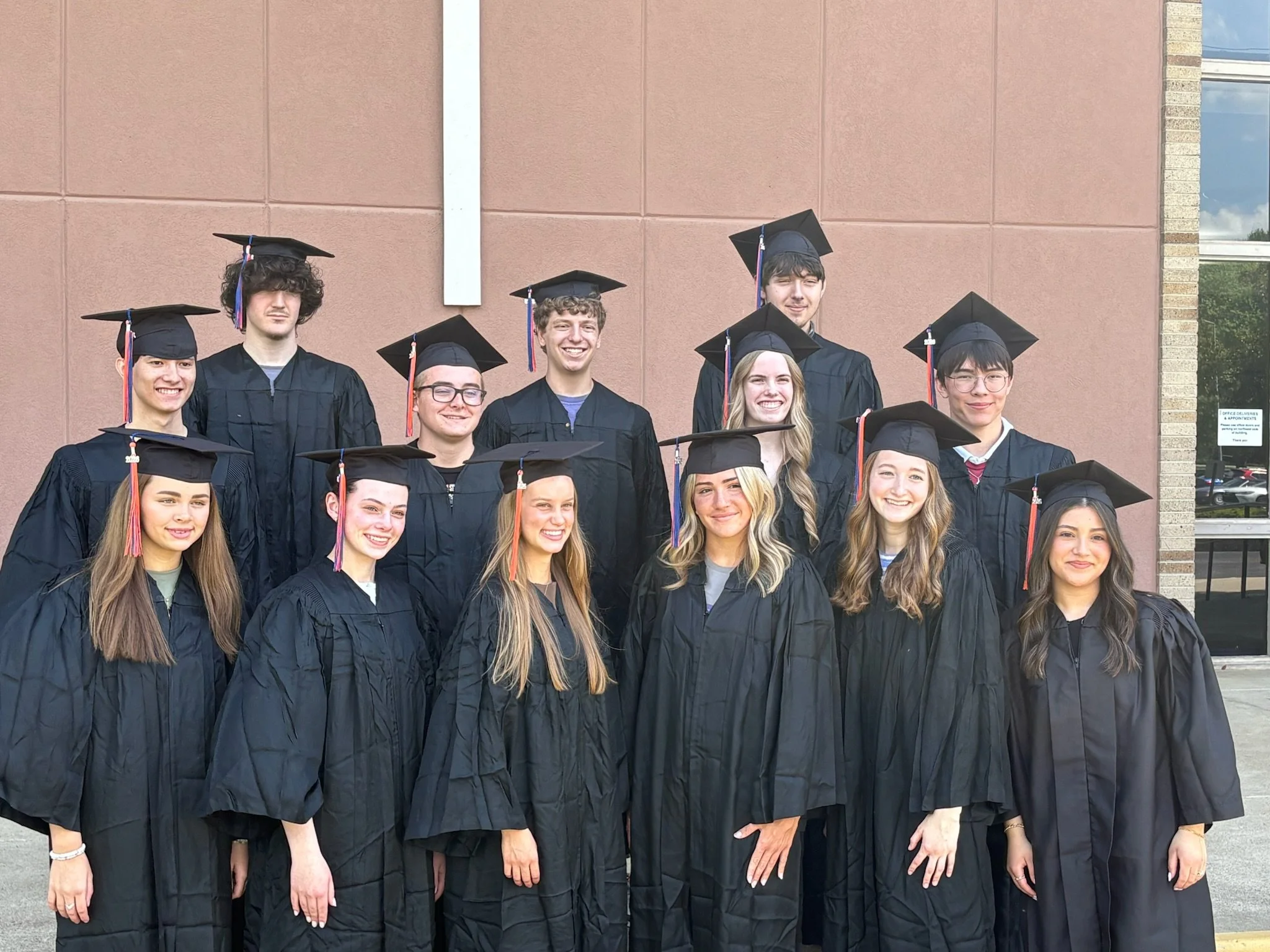
Northpoint Christian Academy is preparing to pursue high school accreditation and transition from its current à la carte model to a full-time high school program beginning with the 2027–2028 school year.
The planned program will build upon Northpoint’s long history of serving homeschool families while creating a more unified academic pathway for students in grades nine through twelve.
Plans for the future high school include a structured full-time course schedule, graduation requirements, academic advising, official transcripts, and a diploma pathway through Northpoint Christian Academy. Additional details will be shared as accreditation planning progresses and the final program structure is established.
Until that transition occurs, high school courses will continue to be offered through Northpoint’s current non-accredited, à la carte homeschool model.
Looking Ahead
Our vision is to create a high school experience that:
Maintains Northpoint’s Christ-centered mission and culture
Provides a clear and accountable path toward graduation
Prepares students for college, career, ministry, and service
Offers strong academics within a relational environment
Preserves meaningful partnership with parents
Helps students identify their gifts and use them with purpose